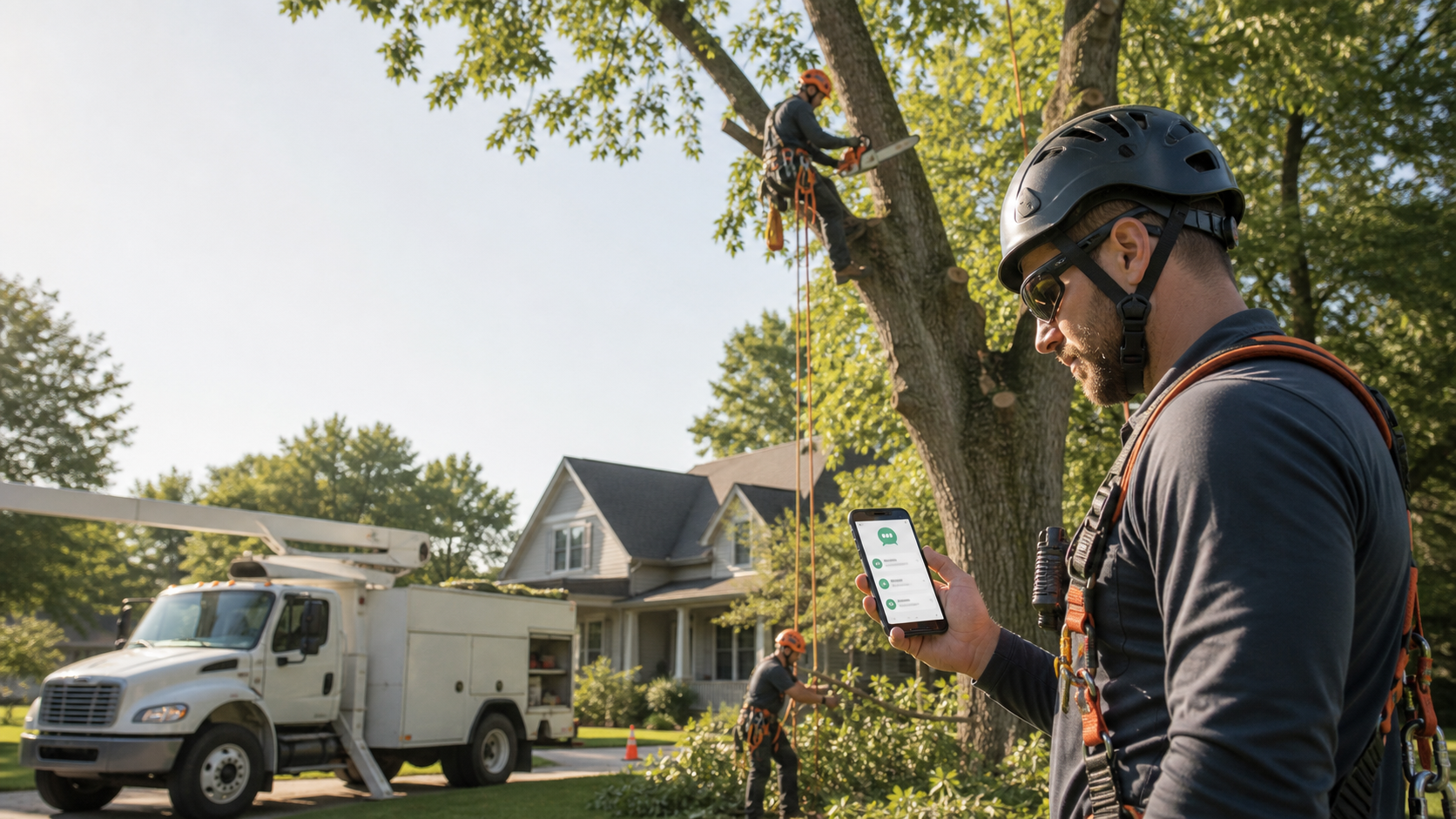
The tree service business runs on tight margins and tighter schedules. A storm rolls through, the phone rings off the hook for three weeks, then goes silent. You're either drowning in work you can't staff or scrambling to fill the calendar between big jobs. The problem isn't your skill with a chainsaw or your crew's efficiency — it's the feast-or-famine lead flow.
Most tree service companies rely on word-of-mouth, yard signs, and hoping the phone rings. That works until it doesn't. When you need leads consistently, not just after weather events, you need a system that works whether you're on a job site or not.
Why Tree Service Lead Generation Is Different
Tree work isn't an impulse buy. Property owners call you when a branch threatens their roof, when storm cleanup can't wait, or when they finally decide that dead oak needs to come down. The decision cycle ranges from "I need someone today" to "I'll think about it for six months."
That variability makes traditional advertising expensive and inefficient. A billboard or radio spot reaches people who won't need tree service for years, if ever. You pay for exposure, not intent.
Digital lead generation solves this by connecting you with people actively searching for tree service in your area — right when they need it. Someone typing "emergency tree removal near me" or "stump grinding [your town]" is ready to hire. Your job is to be the first credible option they find.
The Three Lead Channels That Work for Tree Services
Local Search (Google Business Profile and Local SEO)
When someone searches for tree service in your area, Google shows a map with three local businesses. If you're not in that top three, you're invisible to most searchers.
Your Google Business Profile is the foundation. Complete every field: services, service area, hours, photos of your crew and equipment, and customer reviews. Post updates when you finish notable jobs — a large oak removal, storm cleanup, or specialty work. Google rewards active, complete profiles with better visibility.
Local SEO goes deeper. Your website needs pages for each service you offer (tree removal, trimming, stump grinding, emergency service) and for each town you serve. Write real content about the work, not keyword-stuffed filler. A page titled "Tree Removal in [Town Name]" should explain what the process looks like, what equipment you use, how you handle debris, and what property owners should expect.
Get listed in local directories: Yelp, Angi, HomeAdvisor, and your chamber of commerce. Consistency matters — use the exact same business name, address, and phone number everywhere.
Paid Search (Google Ads for Tree Service)
Paid search puts you at the top of results for high-intent searches. When someone searches "tree service near me" or "emergency tree removal," your ad appears above organic results.
The key is bid strategy and geographic targeting. Tree service is local — you don't need clicks from people fifty miles outside your service area. Set a tight radius around the areas you actually serve. Bid higher on emergency and removal keywords, lower on informational searches like "how much does tree trimming cost."
Track which keywords convert to actual jobs, not just phone calls. A click that costs $15 might seem expensive until you realize it led to a $2,500 removal job. Most tree service companies stop Google Ads too early because they focus on cost per click instead of cost per job.
Use call tracking numbers in your ads so you know which keywords drive calls. Record those calls (with disclosure) and listen. You'll learn which searches bring serious buyers versus tire-kickers.
Referral Systems (Making Word-of-Mouth Scalable)
Word-of-mouth is still your best lead source, but waiting for it is passive. Make it systematic.
After every job, ask satisfied customers to leave a Google review. Send a text with a direct link — don't make them search for you. Five-star reviews improve your local search ranking and convert searchers into callers.
Build a referral incentive: $50 off their next service for every new customer they send. Track it. Follow up. Most tree service referrals come from property owners who see your truck in the neighborhood or hear about you from a neighbor. Give your happy customers a reason to mention you.
Partner with related businesses: landscapers, home builders, property managers, real estate agents. They interact with property owners who need tree work. Offer a reciprocal referral arrangement or a small finder's fee. One good relationship with a property management company can fill your calendar for months.
What Makes a Tree Service Lead Actually Convert
A lead is worthless if it doesn't become a job. Conversion happens in three places: the call, the estimate, and the follow-up.
Answer the phone. Sounds obvious, but most tree service companies miss calls when they're on a job. Use a virtual receptionist service or set up voicemail-to-text so you can respond quickly. The first company to call back usually wins the job.
Show up when you say you will for estimates. Property owners understand you're busy, but they won't wait a week for a quote. Aim for next-day estimates. If you can't make it, communicate clearly about when you can.
Send written quotes immediately after the site visit. Email or text a PDF with line-item pricing, scope of work, and when you can start. Include photos of your past work. The faster you deliver the quote, the less time the property owner has to call three other companies.
Follow up on estimates that don't close immediately. Most property owners get multiple quotes. If you haven't heard back in three days, send a quick text: "Did you have any questions about the quote we sent?" Some will have gone with someone else, but others were busy or forgot. A simple follow-up closes jobs.
The ROI Model for Tree Service Lead Generation
Tree service jobs range from $200 trimming work to $5,000+ removals. Your lead generation cost should match the job value.
If your average job is $1,200 and your margin is 30%, you make roughly $360 per job. You can afford to spend $50-$75 to acquire that job and still profit. That's the frame for evaluating any lead source.
Google Ads might cost $20-$40 per lead (phone call or form submission). If one in three leads converts to a job, your cost per job is $60-$120. High, but workable if your average job value is above $1,000.
Local SEO costs time more than money — consistent effort updating your website, posting to Google Business Profile, and getting reviews. The ROI builds over months, but once you rank well, leads are nearly free.
Referral systems have the lowest cost per lead because you're only paying after the job is done. The challenge is volume — you can't scale referrals as quickly as paid search.
Run all three channels together. Local SEO builds foundation traffic, paid search fills gaps during slow periods, and referrals create predictable repeat work.
Building a Lead System That Runs Without You
The goal is a lead system that doesn't require you to stop work and manage it every day. Set up tracking, automation, and delegation.
Use a simple CRM (JobNimbus, Jobber, or even a Google Sheet) to track every lead: source, contact info, quote sent, job status. Review it weekly. You'll see which lead sources produce jobs and which waste time.
Automate follow-up where possible. If someone fills out a contact form, send an automatic confirmation email: "We received your request for [service]. We'll call you within 2 hours." Then make sure someone actually calls.
If you're running paid search, check performance weekly — not daily. Adjust bids based on cost per job, not cost per click. Pause keywords that generate calls but never convert.
Delegate estimate follow-up to an admin or family member. Give them a script and a list of open quotes. A fifteen-minute call session every afternoon will close jobs that would otherwise go cold.
Most Tree Service Companies Stop Here — Don't
You've generated leads, converted some to jobs, and filled the schedule. Most companies stop. The next step is retention and upsell.
After you finish a job, add the property owner to an email or text list. Send seasonal reminders: "Fall is the best time for trimming before winter storms" or "Spring storm damage? We're booking emergency removals." Past customers are ten times more likely to hire you again than a cold lead.
Offer maintenance plans for commercial properties or high-end residential clients: quarterly inspections and trimming at a set annual rate. Predictable recurring revenue smooths out the seasonal swings.
Track customer lifetime value, not just individual job value. A $1,200 removal customer who comes back every two years for trimming is worth $4,000+ over a decade. Spend accordingly to keep them.
Tree service lead generation isn't about getting more phone calls — it's about getting the right calls at the right time and converting them efficiently. Build the system, track what works, and refine.